


What is surrender?
"Not voting is not a protest. It is a surrender." ― JFK
“At fifteen life had taught me undeniably that surrender, in its place, was as honorable as resistance, especially if one had no choice.” ― Maya Angelou
“We shall never surrender,” ― Winston Churchill
“The moment you completely accept your non-peace, your non-peace becomes transmuted into peace. […] This is the miracle of surrender.” ― Eckhart Tolle
“I wish it to be remembered that I was the last man of my tribe to surrender my rifle.” ― Sitting Bull
“By letting it go it all gets done. The world is won by those who let it go. But when you try and try, the world is beyond the winning.” ― Lao Tzu
Which of those definitions comes the closest to how you feel about the word surrender? Isn’t it funny how we have such different associations around this concept? The act is the same, but the implications are so different – giving up versus letting go.
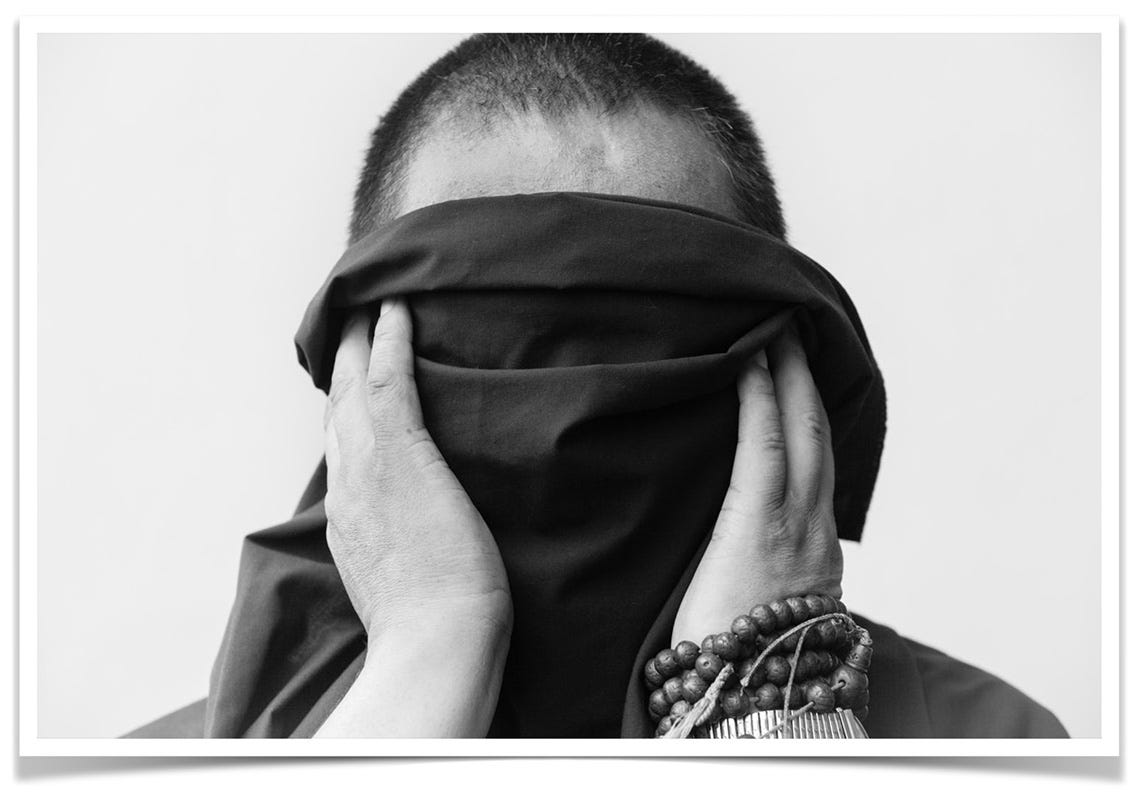
The photo above is not a photo of surrender. It is in fact the very opposite. It was a protest. I exist.
The man in the photo is a Tibetan Buddhist monk I photographed in India as part of my Enemies project. He was one of many Tibetans I met who had fled Tibet, crossing the Himalayas on foot into India. Like many other Tibetan monks he had been jailed in China, and decided that his best option on release was to leave the country and join the Dalai Llama in Dharamshala, India.
When I first arrived in Dharamshala, I was unprepared for what I saw. Dharamshala is where the Dalai Llama makes his home in exile in a hilltop temple where he leads the Tibetan religion. The rest of Dharamshala is a bizarre combination refugee village and tourist town – truly surreal mixture of temples, noodle shops, nightclubs, yoga, coffee shops and souvenir stores. At night you might find yourself walking past the blinking neon of a nightclub across a cow dung filled street from worshippers spinning prayer chimes on the outside of a temple.
I had gone to the India-China border to work on my Enemies Project, a multi-year work in which I was bringing people together from opposite sides of violent conflicts and photographing them with each other after they’d heard each others’ stories. I’d already worked on the project in a number of African countries and in Kashmir on the border of India and Pakistan, but in Dharamshala everything fell apart.
A project like Enemies is complicated. I spent a year lining up my first set of contacts before I got on a plane. But even after doing prep like that the process on the ground with such delicate work is immensely challenging and can be greatly influence by the chance encounters you have when you first arrive. The China-Tibet conflict turned out to be more challenging than I expected. Specifically, the community of refugees I met in India convinced me to think differently about how I would present their situation. At that time, and to this day, there is no resolution to the Tibetan that the people agree with. Tibet is still occupied in their eyes and in their hearts. And the pain they experienced and told me about was very real. Nobody I met was willing to be a part of the project as I had envisioned it. But they did want their voices heard.
Fear
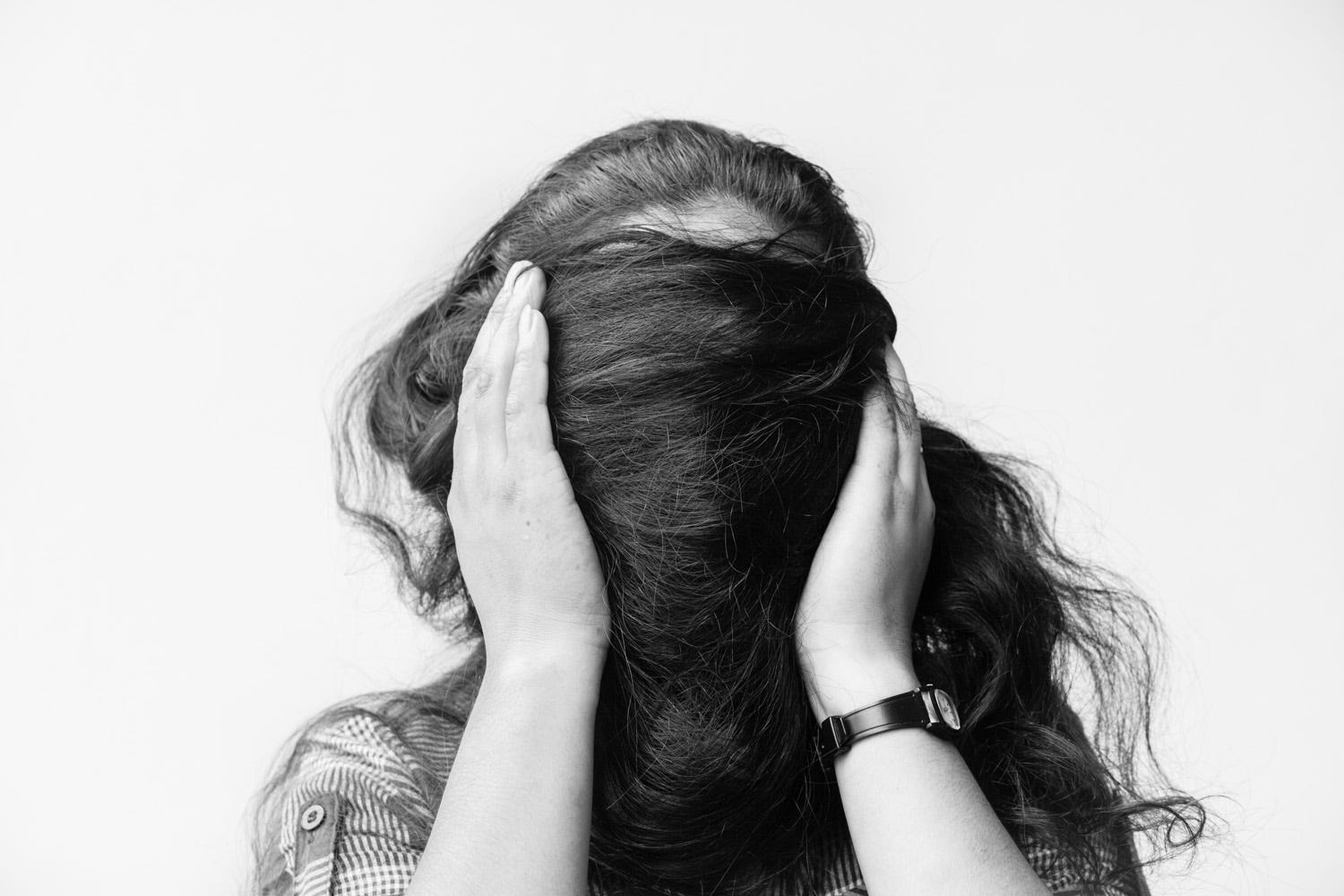
Many of the Tibetan refugees I met in India feared that their families back home might be targeted by Chinese authorities if they were recognized. It was a very warranted fear. But they still wanted to show the world that they were not surrendering, and when I offered them the idea of being photographed covering their faces, a surprising number of people volunteered.
This was their act of defiance, and it has stuck with me for many years. I’ve kept in touch with many people who I photographed around the world, but most of these refugees slipped in front of my camera and then slipped away again, disappearing into the currents of the past. Most of them had recently arrived in India, and were working with the Tibetan refugee community to restart their lives. That was over a decade ago now, and I often wonder how they have all fared.
Here we are
Here we are.
Here in the United States we have always thought of ourselves as a bastien of democracy – a lighthouse for those seeking representation and a bulwark against authoritarian governments. Certainly this myth is full of holes, but now more than ever we are entering a time that may require us to make the same sort of choice as the Tibetan refugees that I photographed. All those people felt powerless against the vast force that taken their sovereignty away. Perhaps in their moment of time they were powerless. But they still had a voice.
Now it is our time to decide whether we will speak or be silent as we watch our rights and the rights of our neighbors being taken away at a speed that we didn’t think was possible. We now live in a country ruled by people who have said in front of a microphone that love thy neighbor only counts if your neighbor looks like you and believes in the same thing. This is not what I grew up believing and it is not what I want our country to be.
We are not in the situation of those refugees yet. We have many more choices, and we still have much more power. If we believe in the founding principles of our democracy, we each have to seriously consider whether we will stand up for those beliefs.
I don’t think there is one answer. It is not an all or nothing thing. You can do something big or you can do something small. You have a voice that can be heard, even if you feel afraid to speak loudly.
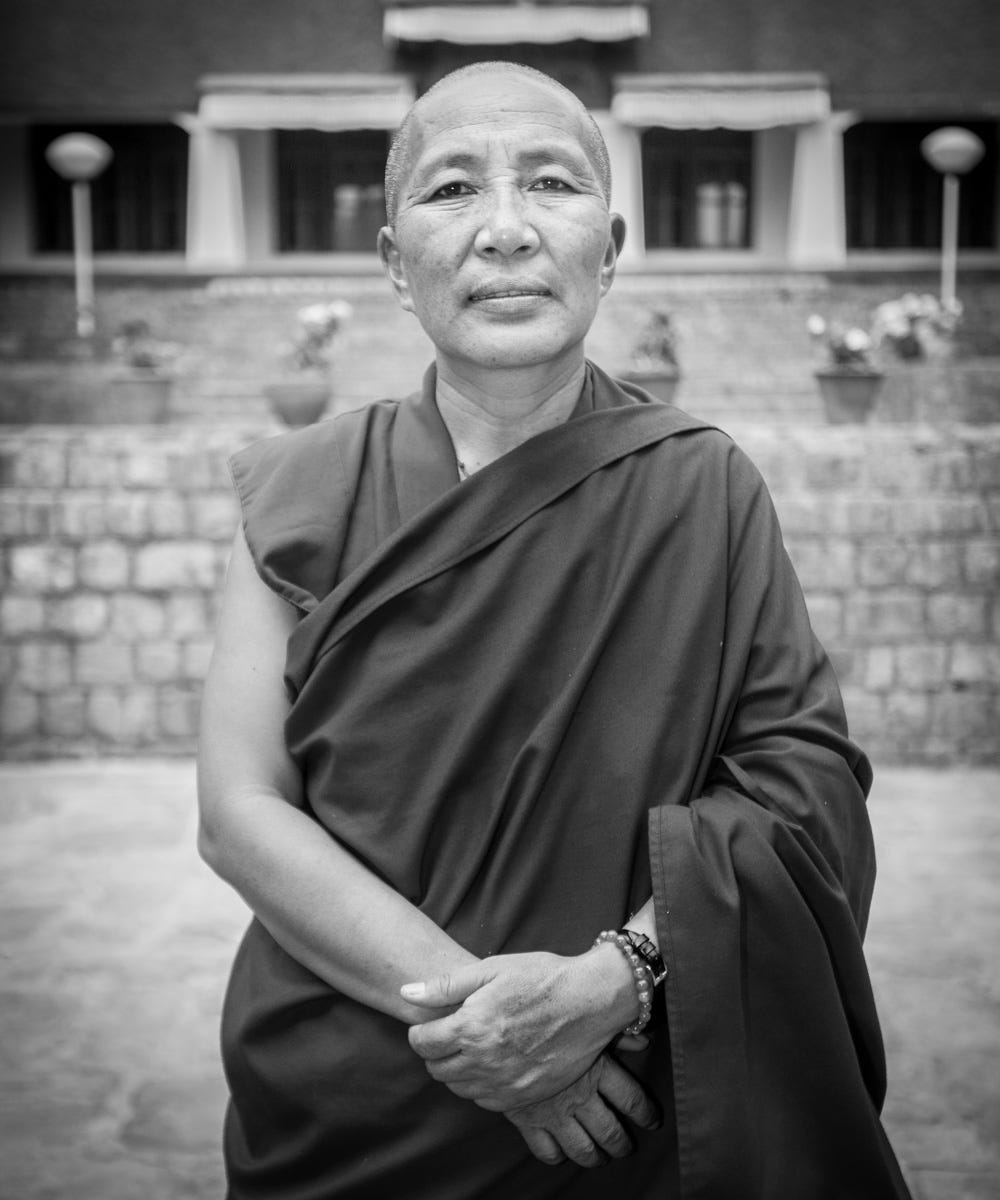
Take heart from these neighbors from around the world who stood in front of a camera even though they were afraid. This is your country. It is our country. It is the country of all of us.
When I started this post I had planned to talk about something entirely different. More soon…